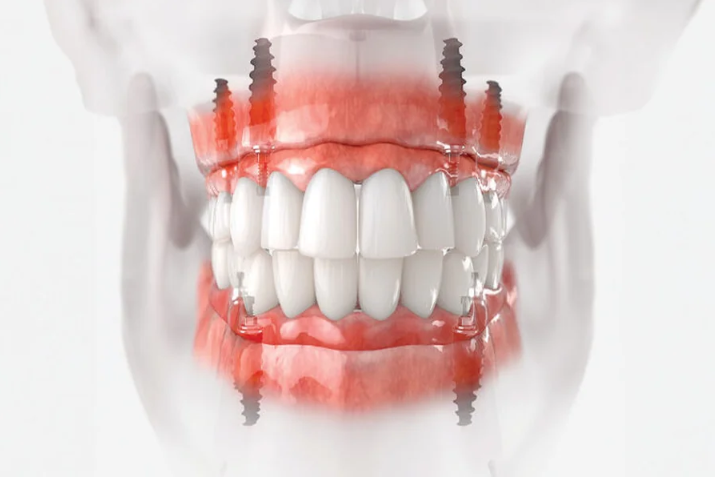
You might be staring at a missing tooth, a loose denture, or a treatment plan that feels bigger than you expected. The stress is real. Dental implants sound permanent, expensive, and deeply personal because they are. You are not just replacing a tooth. You are trusting a Tempe oral surgeon to work in a small space filled with bone, nerves, sinuses, and pressure points that affect how you eat, speak, and feel every day.
The Importance Of Surgical Precision In Implant Dentistry comes down to one simple truth. A few millimeters can change everything. Precise planning and placement help protect nearby structures, support healing, and give the implant the best chance to stay stable for years. When implant surgery is done with care, the result is not only a secure tooth replacement. It is comfort, function, and fewer problems you have to fix later.
Precise implant placement protects function, comfort, and long term results
Dental implants are designed to act like artificial tooth roots. According to the FDA’s guidance on dental implants, they require healthy healing and ongoing care, and they are not free of risk. That matters because people often hear the success stories and assume the procedure is routine in every case. It is common, yes. Simple, not always.
The jaw is not a blank canvas. Bone width can be limited. Bone height can be reduced after tooth loss. The implant angle has to match the final bite, not just the empty space in the gum. If placement is off, the crown may carry pressure the wrong way. That can lead to loosening, gum irritation, food trapping, bone loss, or a result that never feels quite right when you chew.
This is where surgical accuracy in dental implants matters. Precision starts before the first incision. It includes imaging, bone assessment, bite analysis, and a plan for the final restoration. It also includes knowing when a case needs grafting, when to delay placement, and when to avoid shortcuts. You do not want guesswork near the inferior alveolar nerve or the maxillary sinus. You want measured decisions.
A skilled oral surgeon and implant dentist looks at the whole chain of events. If the implant is placed a little too shallow, too deep, too far toward the lip, or too close to another tooth, the problem does not stay small. It can affect appearance, cleaning, speech, and the way force travels through the jaw. A patient may only notice that something feels off. Underneath that feeling, the biology may already be under strain.
Modern implant dentistry relies on planning, imaging, and controlled technique
Technology has made precise implant dentistry more predictable. Three dimensional imaging helps map bone and identify nearby anatomy with much more detail than a standard two dimensional image. Digital planning tools can help guide angle, depth, and position. Researchers at Ohio State even developed a real time digital system to improve dental implant placement, which shows how strongly the field is focused on reducing error during surgery.
That does not mean technology replaces judgment. A guide is only as good as the plan behind it, and the plan is only as good as the clinician using it. An experienced surgeon knows how to adapt when bone quality is weaker than expected, when soft tissue behaves differently, or when preserving long term health matters more than finishing fast.
Healing also depends on biology. The implant must integrate with bone, a process known as osseointegration. The overview in NCBI’s review of dental implants makes clear that case selection, surgical technique, and follow up care all influence outcome. Precision is not just mechanical. It is biological. The body has to accept and stabilize what was placed.
Small placement errors can create larger problems after implant surgery
You may be thinking, if implants are so advanced, why does precision need this much attention? Because the mouth does not forgive repeated stress very well. A crown that hits too hard can overload the implant. An implant placed in poor bone can fail to integrate. A position that looks acceptable on an X ray may still create a cleaning problem that causes inflammation month after month.
Those problems are frustrating because they often cost more to fix than to prevent. Revision surgery, grafting, replacement parts, and added healing time can turn one procedure into a long process. There is the financial side, but there is also the emotional side. People get tired. They lose confidence. They start wondering if they made the wrong choice, when the real issue may have been planning or execution.
Key differences between careful implant placement and rushed treatment
| Factor | Careful, precision focused treatment | Rushed or poorly planned treatment |
|---|---|---|
| Imaging | 3D assessment of bone, nerves, and sinus position | Limited view of anatomy and spacing |
| Implant position | Matched to bite, bone support, and final crown design | Placed mainly to fill space, not function |
| Risk to nearby structures | Lower risk through measured depth and angulation | Higher risk of nerve, sinus, or root involvement |
| Healing | Better chance of stable osseointegration | Greater chance of overload or poor integration |
| Long term maintenance | Easier cleaning and healthier surrounding tissue | More plaque retention and irritation |
| Cost over time | Higher value through fewer corrections | More expense if revision is needed |
Clear steps help you choose the right implant treatment path
Ask how the implant position is planned. You want a direct answer. Ask whether 3D imaging is used, how bone is measured, and how the final tooth position guides surgery. If the explanation feels vague, pay attention to that.
Discuss risk factors before scheduling surgery. Smoking, gum disease, diabetes, teeth grinding, and bone loss all matter. So does the location of the missing tooth. Front teeth often demand tighter control for appearance. Back teeth often carry heavier bite forces.
Choose an oral surgeon and implant dentist who connects surgery to the final result. The implant is only one part of the outcome. The gum shape, crown fit, bite balance, and cleaning access all depend on where and how the implant is placed. Good treatment feels coordinated from the start.
Precision in implant dentistry gives you a stronger foundation
When you are weighing implant treatment, your instincts are usually right. You want the procedure done carefully because the stakes feel personal. They are. Implant dentistry works best when planning is detailed, placement is controlled, and healing is respected. That is what gives the implant a fair chance to last and feel natural in daily life.
If you are considering treatment, take the next step by scheduling a consultation with an oral surgeon and implant dentist who treats precision as the standard, not the upgrade.