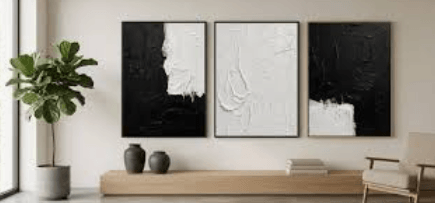
Trends in interior design move fast, but one look remains completely immune to the changing seasons: the combination of black and white. While bold colors can dominate a room and quickly look outdated, a monochrome palette offers a timeless sense of elegance, balance, and quiet luxury. Striping away color forces the viewer to focus on what really matters—form, contrast, texture, and light. Whether you are aiming for a sleek ultra-modern layout, an industrial loft look, or a warm Scandinavian sanctuary, monochrome artwork acts as the perfect anchor.
In this deep-dive guide, we will break down the visual psychology of high-contrast styling, explore how to incorporate minimalist pieces across your home, and discuss why pairing black and white canvases with physical art pieces creates a sophisticated, gallery-grade atmosphere.
The Timeless Appeal of Monochrome Designs
In a world full of constant visual noise, monochrome art offers a calm place for your eyes to rest. When you eliminate color from a canvas, the composition relies entirely on its core design principles. This brings out several unique strengths in an interior setting:
- High Visual Contrast: The dramatic shift between deep shadows and bright white elements creates an instant focal point that catches the eye from across any room.
- Effortless Integration: You never have to worry if a monochrome painting will clash with your rugs, curtains, or furniture cushions. It coordinates beautifully with any existing color scheme.
- Emotional Clutter-Free: Bold primary colors can sometimes stimulate anxiety or restlessness. Black and white art, conversely, promotes a calm, ordered environment that helps you focus.
By introducing carefully curated pieces from Black and White Wall Art – Monochrome and Minimalist Design, you can ground your living spaces with an aesthetic that is both deeply classic and modern.
How to Style Minimalist Artwork Across Your Home
Minimalist monochrome art is incredibly versatile, but it requires deliberate placement to truly shine. Here is how you can style black and white pieces across different rooms to achieve a high-end designer finish:
1. The Modern Living Room: The Statement Canvas
The living room should feel open and balanced. A large-scale monochrome painting can bring structure to an open-floor concept.
- Styling Tip: Hang a massive abstract expressionist piece with bold black brushstrokes over a neutral gray, white, or cream sofa. This layout keeps the room looking clean, spacious, and deliberate.
- Accents: Balance the high-contrast wall art by adding matte black floor lamps, brushed metallic frames, or raw marble side tables.
2. The Executive Home Office: Promoting Focus
A workspace needs to encourage deep analytical thinking and clear focus. Colorful, chaotic paintings can break your concentration.
- Styling Tip: Frame a series of minimalist black-and-white geometric prints or structural architectural photographs in a horizontal row behind your main desk. The clean lines will promote a productive, professional mindset.
3. The Transitional Hallway: The Gallery Wall
Long, narrow hallways are often neglected in home styling. A monochrome gallery wall is an excellent way to breathe life into these empty areas.
- Styling Tip: Arrange a grid of six to eight smaller, matching black frames featuring high-contrast line drawings. Using matching frames and a strict monochrome palette prevents a narrow space from looking chaotic or cramped.
The Elements of Luxury: Textures and Sub-Genres
Many people mistakenly assume that black and white art is simple or repetitive. In reality, the monochrome universe is incredibly diverse, split into several distinct sub-genres that evoke different design feelings:
| Art Style | Visual Elements | Best Structural Match |
| Minimalist Line Drawings | Single continuous black strokes on an off-white background. | Light oak wood and linen textiles. |
| High-Contrast Typography | Bold, structural lettering or intellectual quotes. | Industrial metal pipe frames and raw concrete. |
| Abstract Ink Wash | Subtle gray gradients, fluid flows, and smoky textures. | Polished marble floors and glass surfaces. |
| Geometric Constructivism | Sharp angles, checkerboard patterns, and crisp structural blocks. | Mid-century modern furniture and brass accents. |
To keep a neutral room from looking flat, prioritize textured paintings. Look for canvases that use heavy impasto textures, matte gesso layers, or raw, unprimed linen backgrounds to give your walls an interesting, tactile dimension.
Expanding the Horizon: Mixing Canvases with Three-Dimensional Art
While a stunning black-and-white canvas defines the visual boundary of your walls, a truly upscale space needs to break the flat plane. Luxury interior design relies heavily on layering different mediums, shapes, and weights to create physical depth and shadow. To complement a minimalist, monochrome wall arrangement, you should look toward physical, three-dimensional sculptures.
The stark contrast of black and white art on a wall pairs incredibly well with heavy, physical materials like cast metal, carved stone, or dark wood. For example, placing a rich, dark metallic sculpture on a console table underneath a minimalist line drawing creates a stunning visual balance. The sculpture grounds the space, while the wall art lifts the viewer’s eye upward.
Furthermore, building an art collection is about more than just matching your furniture—it is a recognized method for building long-term wealth through tangible, inflation-proof assets. Fine art pieces often retain and grow their value over decades, acting as an excellent alternative investment class.
If you are interested in exploring how structural art assets perform over time and want to learn how to evaluate physical pieces for your residential layout, check out this detailed Bronze Sculptures for Modern Art Investment Review to understand the market stability, valuation metrics, and collection trends behind premium art investments.
Professional Tips for Lighting and Framing Monochrome Art
Because black and white art relies entirely on values and contrast, the way you frame and light your pieces can completely change how they look in a room:
- Choose the Right Frame Matting: For minimalist sketches and photography, use a wide white mat board inside a slim black metal frame. The extra white space gives the artwork breathing room and immediately gives it an expensive, museum-like quality.
- Control the Color Temperature: Pay close attention to your lightbulbs. Avoid ultra-bright blue light (5000K+), which makes art look sterile and cold. Instead, choose a crisp, warm-white LED light (around 3000K to 3500K) to cleanly show the white elements while keeping the room feeling cozy.
- Avoid Glare: If you are framing prints under glass, opt for anti-reflective “museum glass.” Traditional glass reflects ambient light and window shapes, completely hiding the deep black tones and fine details of your minimalist art.
See also: Why Payroll Outsourcing Services Help Businesses Improve Efficiency
Conclusion: Achieve Elegance Through Simplicity
Decorating your home with Black and White Wall Art: Monochrome Design and Minimalist Artwork is a timeless design choice that you will never outgrow. By stripping away the distraction of color, you allow your home’s architecture, lighting, and textures to shine together in perfect harmony.
Whether you prefer bold, aggressive abstract brushstrokes or quiet, simple line art, a monochrome foundation gives your space an undeniably sophisticated, intentional feel. By curating your walls with premium black-and-white canvases and balancing them with high-end physical art investments, you transform your house into a balanced, luxury gallery that speaks volumes through pure simplicity. Explore monochrome collections today, discover the power of contrast, and give your walls an elegant, lasting voice.